
Short version
- Being handmade doesn't usually exempt an item from returns. Personalised or made-to-spec items are different.
- Write your policy in plain words: what can come back, how long people have, who pays postage, how fast you refund.
- Put a short version on every product page, not just in the footer.
- A clear policy builds trust and often reduces returns, because buyers feel safe.
- This isn't legal advice. Check your local consumer rules, because they differ by country.
Writing a returns policy for handmade products feels personal in a way it doesn't for big shops. Every item took you hours. Some are one-offs.
When something comes back, it can feel like a small rejection, as well as a cost.
So it's no surprise that many small shops write something protective: "Due to the handmade nature of our products, we do not accept returns."
Here's the problem. In many countries, including Ireland, the UK and the rest of the EU, that line may not be allowed for most online sales. Being handmade doesn't usually take away a buyer's right to change their mind about something bought online.
There are exceptions, and they matter. Personalised items and things made to a customer's own specifications are often treated differently. But "handmade" alone usually isn't one of them.
This article walks you through what a fair, clear returns policy for handmade products looks like, what you can and can't exclude, where to put it, and how it can actually reduce returns. Please treat it as a practical guide, not legal advice. Rules differ by country and they change, so check the details with your local consumer protection body.
Why "no returns on handmade items" is risky
When someone buys from you online, they can't hold the product, try it on or see the colour in real light before buying. Many countries give online buyers extra rights to make up for that.
In Ireland, the UK and across the EU, consumers who buy online generally have a period, usually 14 days from receiving the goods, to cancel and return most items, without needing a reason. This is often called a "cooling-off period" or "right to cancel".
Those rules apply to businesses of all sizes, including one-person studios. And they generally apply to handmade goods just like any other goods.
So a blanket "no returns" policy can be a problem. It can also be confusing for buyers, who may know their rights and wonder why your policy says otherwise. That doesn't build trust.
Faulty items are a separate matter
There's another set of rights that applies when something is faulty, not as described, or not fit for purpose. These rights apply whether a buyer changed their mind or not, and they generally can't be removed by your policy. If a seam splits or a product isn't what your page said, the buyer is usually entitled to a remedy.
Your policy should say clearly how you deal with faulty items too.

What really can be excluded: personalised and made-to-spec items
Here's the important distinction.
In many places, the right to change your mind doesn't apply to goods that are made to the consumer's specifications or clearly personalised. Think:
- A hat with someone's initials embroidered on it
- A piece made in a custom size someone gave you
- A design created from a customer's own idea or photo
- A colour combination chosen specially by the buyer, made just for them
These are things you couldn't easily sell to anyone else.
But "made to order" isn't automatically the same thing. If you make a standard item from your range only after someone orders it, in a standard size and colour, that may not count as personalised.
It's the same item anyone could buy. Whether a specific product falls into the exception depends on the details, so check the guidance for your country.
Meet Selkie Hats, and the policy that scared buyers away
This is an illustrative example.
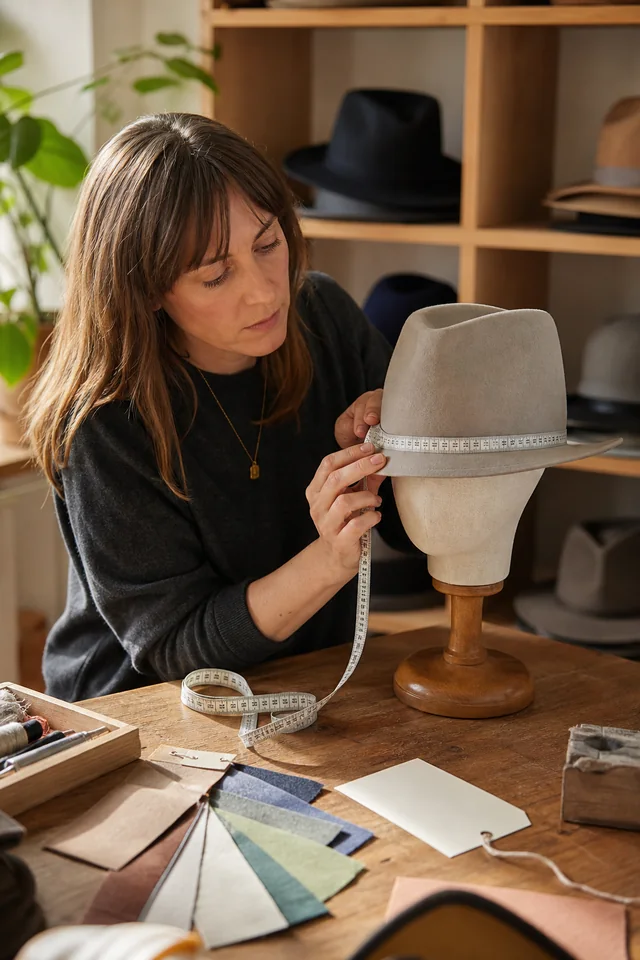
Selkie Hats is a small studio run by Gráinne, who makes felted wool hats: cloches, berets and wide-brimmed sun hats, in a range of colours and sizes. She also offers custom hats, made to a customer's head measurement in a colour of their choice, with optional initials on the inside band.
Her original policy said:
She'd copied it from another small shop, and she thought it protected her.
But two things kept happening. Customers occasionally emailed to say they'd read about their rights and asked why her policy said no returns. And she noticed that on her stock hats, people would add to cart, look around the site, and leave.
When she asked a few customers why they'd hesitated, one said it plainly: "I wasn't sure about the size, and you don't take returns. It felt like too big a risk for a hat."
Her policy wasn't just possibly against the rules. It was costing her sales.
Write your returns policy in plain words
A good returns policy answers a handful of simple questions. Buyers should be able to find each answer in a few seconds.
What can come back?
Say clearly which items can be returned and which can't. For example, "Stock hats can be returned. Custom and personalised hats can't, unless they're faulty."
How long do people have?
Give the time limit. If you're following the common 14-day cancellation rules, say when the 14 days starts and how long they then have to send it back. Check the exact wording for your country.
What condition should it be in?
It's fair to ask for items to be returned unworn and in their original condition, with any tags. Buyers can usually handle and try items to decide, much like they would in a shop. But you can generally reduce the refund if the item has been used more than that.
Who pays return postage?
In many places, you can ask the buyer to pay for return postage when they've simply changed their mind, as long as you've told them this clearly before they buy. If an item is faulty, you'd generally cover it. Some small shops choose to cover return postage anyway, to make buying feel safer.
How and when will they get their money back?
Say how refunds are paid (usually to the original payment method) and roughly how quickly. Many places have rules about how soon refunds must be made, so check your local guidance.
How do they start a return?
Give a simple first step. "Email us with your order number." Don't make people hunt for a form.
Selkie's new policy, in plain words
Here's the policy Gráinne wrote after checking the guidance for Ireland. It's shorter than you might expect.
Everything a buyer needs is there. It's warm, clear and honest about the custom exception. And it doesn't use "handmade" as a reason to say no.

Put a short version on every product page
A returns policy in the website footer is easy to forget. Most buyers never click it.
But the moment they're deciding whether to buy, especially something like a hat or clothing, they want to know: "What if it doesn't fit?"
So put a one-line summary right next to the price or size options:
- On stock hats: "Free to change your mind: return within 14 days. [Returns policy]"
- On custom hats: "Made to your measurements, so it can't be returned unless faulty. [Help with measuring]"
Gráinne added these lines in late spring. Within a couple of months, she noticed fewer abandoned carts on stock hats. People who'd hesitated about size felt safe to try.

The surprise: clear returns can mean fewer returns
This feels backwards, so it's worth explaining.
When a buyer sees "no returns", they worry. Many leave.
Some buy anyway, but if anything isn't quite right, they feel trapped and frustrated. They're more likely to complain, leave a poor review, or ask their card company for their money back.
When a buyer sees a clear, fair policy, they relax. They buy.
And because they feel they could return it, many of them never do. They keep it, because they like it, and the safety net was what they needed to take the first step.
Gráinne's actual return rate on stock hats ended up low. Most people who bought kept their hats. Her sales went up more than her returns did.
Reduce returns at the source
The best returns policy is one that rarely gets used. The best way to make that happen is to answer buyers' doubts before they order.
- A clear size guide, so people choose the right size. For hats, Gráinne explains how to measure a head with a piece of string and a ruler.
- Honest photos in natural light, so colours look right.
- Clear descriptions of materials and feel. "Soft felted wool, slightly fuzzy, not itchy for most people."
- Answers to common questions near the price.
Every one of these makes returns less likely, because people know what they're getting.
Make custom orders clear before people pay
If you offer custom or personalised items that can't be returned for a change of mind, make that very clear at the point of ordering, not just in the policy.
Gráinne added a short tick box to custom hat orders: "I understand this hat is made to my measurements and can't be returned unless faulty." She also asks customers to double-check their head measurement and confirms it by email before she starts.
This makes sure people understand what they're agreeing to. It also cuts mistakes, because many people re-measure when they see the confirmation.
How to handle returns kindly when they happen
Returns will happen. When they do, how you handle them matters just as much as your policy.
- Reply quickly and warmly. "No problem at all, here's how to send it back."
- Don't ask people to justify their decision, if they're within their rights.
- Process the refund promptly once the item arrives.
- If you'd like feedback, ask gently and make it optional. "If you're happy to tell us why it didn't work, it helps us improve."
A smooth return often turns into a future sale. People remember how you treated them, and they tell friends.
Common questions about returns for small handmade shops
Can I charge a restocking fee?
In many places, you generally can't charge a fee just for processing a change-of-mind return, but you may be able to reduce a refund if an item has been handled more than needed to check it. Check your local rules before adding any fee.
What if the item comes back damaged?
If an item comes back worn, damaged or used beyond what's reasonable, you may be able to reduce the refund. Take photos when it arrives and explain calmly to the buyer.
Does this apply to markets and in-person sales?
The cooling-off period for online sales doesn't usually apply to in-person sales at a market or shop. Many sellers offer exchanges anyway, as goodwill. Faulty items generally still need putting right.
Does this apply to business customers?
Consumer rules usually apply to sales to individuals, not to other businesses. If you sell wholesale, your terms with shops can be different.
Where to check the rules for your country
Because consumer law varies and changes, check the guidance where you're based and where you sell.
If you sell to buyers in the United States
Don't copy the 14-day cancellation wording for Ireland, the UK or EU into a US returns policy without checking the rules that apply to your shop.
One federal rule for mail, internet and telephone orders says that when no shipping time is clearly stated, the seller must have a reasonable basis to expect shipment within 30 days after a properly completed order, or within 50 days if the buyer applies to the seller for credit to pay for the order.[1]
If the seller cannot ship within the applicable time, it must offer the buyer the choice to accept a delay or cancel and receive a prompt refund.[1] That rule covers orders that have not shipped. It does not set a change-of-mind return window for an item already delivered.[1]
State rules can add disclosure requirements. New York, for example, requires online retailers to show or link the refund policy near the item or before asking for billing information, and to state the conditions for refunds.[2]
For US orders, write a separate policy summary and check the rules for the states where you sell and where your buyers live. Do not assume that handmade or made-to-order wording settles whether a buyer can return an item.
- In Ireland, the Competition and Consumer Protection Commission (CCPC) publishes guidance for businesses selling online.
- In the UK, official government guidance and organisations like Citizens Advice explain the rules for online sellers.
- Elsewhere in the EU, your national consumer authority will have guidance.
If you sell to buyers in several countries, or you're unsure about a particular product, it's worth getting proper advice.
Keep a simple returns log
Every return tells you something. The trick is to write it down so the lessons don't get lost.
You don't need anything fancy. A simple table with a few columns is enough:
| When | Product | Reason given | What I could change |
|---|---|---|---|
| Week 1 | Grey cloche, size M | Too small | Add head measuring guide near size options |
| Week 3 | Navy beret | Colour darker than expected | Retake photo in natural light |
| Week 6 | Sun hat | Changed mind | Nothing obvious |
After a few months, patterns appear. Maybe one style keeps coming back for size.
Maybe one colour keeps surprising people. Maybe returns spike after a particular email or promotion.
Gráinne noticed that most of her returns were cloches in size M. When she looked closer, she realised her M cloche was cut slightly smaller than her other M hats. She adjusted the size guide for that style, and the returns stopped.
Ask gently, don't interrogate
To fill in the "reason" column, you'll need to know why people returned items. Ask in a friendly, optional way.
Some people won't say, and that's fine. Many will, especially if they feel you genuinely want to improve.
Share what you learn with your future self
Once a season, read back through the log and pick one change to make. One clearer photo, one better size note, one extra line in a description. Small fixes, made regularly, are what slowly bring your returns down.
Your returns policy checklist
- My policy doesn't say "no returns" just because items are handmade.
- It separates stock items from personalised or made-to-spec items.
- It explains faulty items separately.
- It says how long people have, who pays postage, how refunds work and how quickly.
- It tells people how to start a return in one step.
- There's a one-line summary on each product page, next to the price or size.
- Custom orders have a clear agreement before payment.
- I've checked the current guidance for my country.
A fair policy is part of the product
When someone buys a handmade hat, a print or a pair of earrings online, they're trusting a small business they may never have met. A clear, fair returns policy is one of the strongest ways to show you're worth that trust.
You don't have to be a big shop with free returns on everything. You just need to be honest about what can come back, generous where you can afford to be, and clear about the things made just for one person.
Do that, and your returns policy stops being something buyers fear. It becomes one of the reasons they feel safe saying yes.
Sources
[1] Electronic Code of Federal Regulations, 16 CFR Part 435
[2] New York State Senate, General Business Law § 218-a (archived 2026-01-16)
Keep going
Product Pages / Practical guide
How to make a size guide that stops "wrong size" returns before they happen
Most size guides ask buyers to measure their own body with a tape measure they can't find. The better trick is to ask them to measure something they already own and love.
Product Pages / Practical guide
Shipping Information on Product Pages: Show Preparation Time, Delivery Time and Cost Beside the Buy Button, Not at Checkout
Delivery isn't a policy buried in your footer. It's part of what you're selling. Show how long you take to prepare an order, how long the courier takes and how the charge works right beside the buy button, and keep products that ship differently from sharing one misleading line.
