
Short version
- A bundle should solve a problem or fit a moment, not clear old stock.
- The best bundles remove a decision. "Which three should I choose?" becomes "Just get this one."
- Gift sets work because gift buyers are nervous. Make them feel safe.
- Price bundles so the saving is real and clear, or don't show a saving at all.
- Give each bundle its own product page with its own photos and description.
If you're working out how to create product bundles for your shop, you've probably started with a sensible-sounding question: "What could I put together?"
That question leads to bundles built from the shop's side.
Three products that look nice together. A slow seller paired with a fast one. A "mystery box" of whatever's left after a busy season.
Sometimes those sell. Often they sit there.
There's a better question to start with: "What is my buyer trying to do, and how could one product make that easier?"
This article shows you how to build bundles and gift sets from that question. We'll look at the three kinds of bundle that tend to sell, how to price them without confusing people, how to photograph and describe them, and the stock-keeping trap that catches a lot of small shops.
Why leftover bundles rarely sell
When you build a bundle from leftovers, buyers can usually tell.
The items don't quite go together.
The name is vague: "Sampler box", "Lucky dip". The photo is a pile of products.
And the description lists what's inside without saying who it's for or why they'd want it.
Buyers don't care what you need to clear. They care what they need to solve.
A bundle that works is one where the buyer looks at it and thinks, "Oh, that's exactly what I was looking for." That feeling only comes when the bundle was built around them.
Meet Wildgarlic Spice Co, and the "Spice Sampler" nobody bought
This is an illustrative example.
Wildgarlic Spice Co is run by Nuala, who mixes small-batch spice blends in a shared kitchen: smoky barbecue rubs, curry blends, a seaweed seasoning and a few seasonal mixes. She sells them in small tins.
Her first bundle was called the "Spice Sampler". Five tins, chosen by her, at a small discount. It sat on the site for months and sold a handful.
Meanwhile, the same customers kept emailing her with questions.
What Wildgarlic customers kept asking
- "I want to buy a gift for my brother-in-law who loves barbecuing. Which ones should I get?"
- "I'm new to cooking curries. Where should I start?"
- "Do you do anything for a secret Santa, around €20?"
- "What would you recommend for someone who's just moved into their first flat?"
Every one of those questions was a bundle waiting to happen. And not one of them was "a sampler of five tins".
The three kinds of bundle that tend to sell
Nearly all successful bundles in small shops fall into one of three types.
1. The "solve a problem" bundle
Built around something the buyer wants to do. "Everything you need to start making curries." "The complete barbecue rub kit." "A starter set for your first sourdough."
These work because the buyer doesn't have to work out which products go together. You've done it for them.
2. The "fit a moment" bundle
Built around an occasion. Birthdays, new homes, thank-yous, Christmas, secret Santa, a wedding favour.
These work because the buyer is thinking about the occasion first and the product second. "I need a housewarming gift" leads straight to a housewarming bundle.
3. The "remove a decision" bundle
Built for people who can't choose. "Our three bestsellers." "The ones people buy again." "Can't decide? Start here."
These work because choice is tiring. When a shop has lots of options, many people freeze. A bundle that says "start with these" takes the pressure off.
Nuala's new bundles, built from those questions
Nuala replaced the Spice Sampler with three new bundles, each answering a question she'd been asked over and over.
| Bundle name | What's inside | Who it's for |
|---|---|---|
| The Barbecue Box | Three rubs: smoky, sweet and fiery, plus a card with suggested pairings | Someone who loves barbecuing, especially as a gift |
| First Curry Kit | Three blends from mild to medium, plus a simple recipe card for each | Someone new to cooking curries |
| The Secret Santa Tin | Two of the most popular blends in a gift tin, under €20 | Office gifts and gift exchanges with a budget |
Each bundle has a clear name, a clear buyer and a clear reason to exist.
In the first Christmas season, the three new bundles together outsold her single tins for the first time. The Secret Santa Tin was her best-selling product in early December.
Gift sets work because gift buyers are nervous
It's worth stopping on gift sets, because they're the bundles small shops get the most from.
Think about how it feels to buy a gift for someone you don't know very well.
Your sister's new partner. A colleague. A neighbour who fed your cat.
You want to get something nice. You don't want to get it wrong. You don't know their taste.
That's a nervous buyer. And nervous buyers love being told what to buy.
A good gift set does three things for them:
- It looks like a complete, thoughtful gift, not a random product.
- It arrives ready to give, so there's no wrapping stress.
- It fits a budget they can say out loud.
Make it ready to give
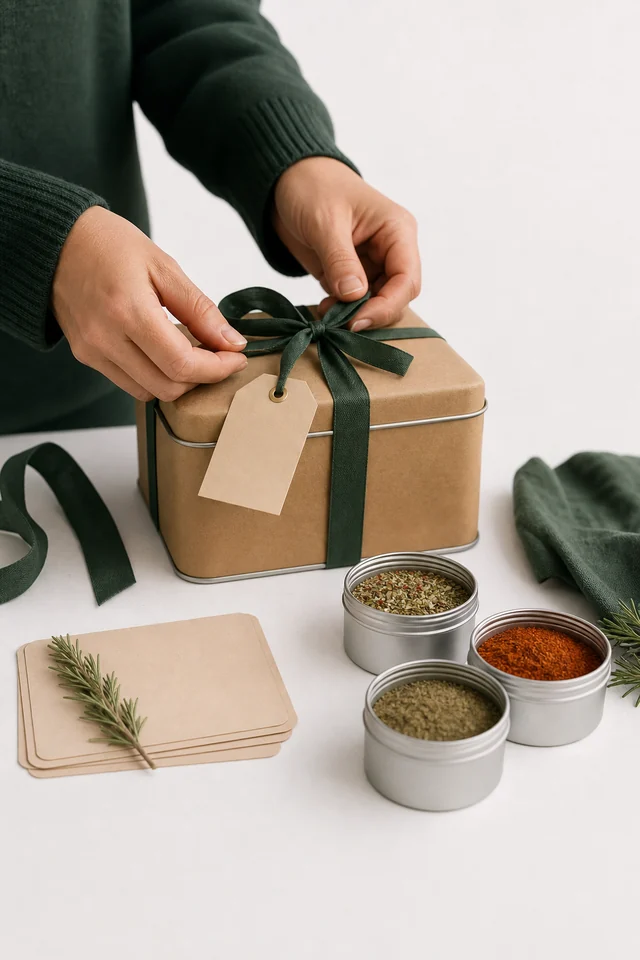
Packaging matters more for gift sets than for anything else. A box, a tin, a ribbon, a little card. Even simple brown paper and string can make a bundle feel like a gift.
Say so clearly on the page. "Arrives gift-wrapped with a blank card for your message."
Offer to send it straight to the person
Many gift buyers want to send the gift directly to the recipient.
Make sure your checkout allows a different delivery address, and that you don't put the price in the parcel. Say this on the gift set page: "We can send it straight to them. No prices included."
Name the budget
People often shop for gifts with a budget in mind. "Under €20", "Under €40". Putting the budget in the name or right under the title helps people find the right gift fast.
How to price bundles without confusing people
Pricing is where many bundles go wrong.
Option 1: Show a real saving
If the bundle costs less than buying the items separately, show the difference clearly.
"Worth €27 if bought separately. Bundle price €23."
Only show a saving if it's real. Don't inflate the separate prices to make the saving look bigger. Buyers can check, and in many places there are rules about misleading price comparisons.
Option 2: Don't show a saving at all
Sometimes a bundle isn't cheaper. It might cost the same, or even a little more, because it includes a gift tin, a recipe card or extra wrapping.
That's fine.
The value isn't the discount. It's the convenience, the presentation and the decision made for you.
Just don't pretend it's a bargain.
Nuala's Secret Santa Tin costs about the same as two tins bought separately, plus the gift tin.
She doesn't mention a saving. She mentions "ready to give, under €20". That's what buyers care about.
Be careful with your margin
When you discount a bundle, check that you're still making a sensible profit after packaging, card, postage and your time. A bundle that sells brilliantly but makes you almost nothing isn't really helping.
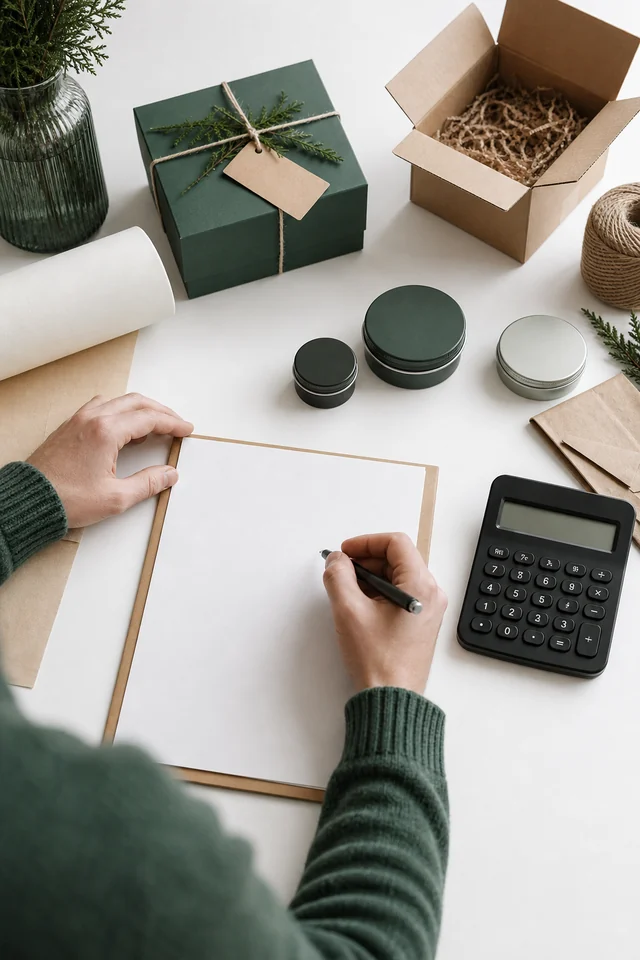
A quick check: add up your cost for everything in the bundle, including packaging and any extra time for wrapping. Then compare it with the bundle price. If the gap is too small, either raise the price, take out an item, or skip the discount.
Write the check as three figures: the cost of the contents, the cost of the presentation and the time cost of putting the order together. Do not leave out the small things because they are easy to forget.
Then write the lowest price you can accept before you look at the selling price. That makes it easier to spot a bundle that looks busy but quietly loses money.
If the bundle includes a card, recipe sheet or special box, decide whether that is part of every order or only the gift version. Your product page and your packing bench should describe the same bundle.
Give each bundle its own product page
A bundle shouldn't just be a line in a description or an option on another product. It deserves its own page, with its own title, photos and description.
There are a few reasons.
People search for gift sets and bundles directly. "Barbecue gift set." "Curry starter kit." A dedicated page with a clear title can be found.
A dedicated page lets you describe who the bundle is for, which is the most important part.
And it gives you something to link to in emails, social posts and gift guides.
Photograph the bundle as one thing
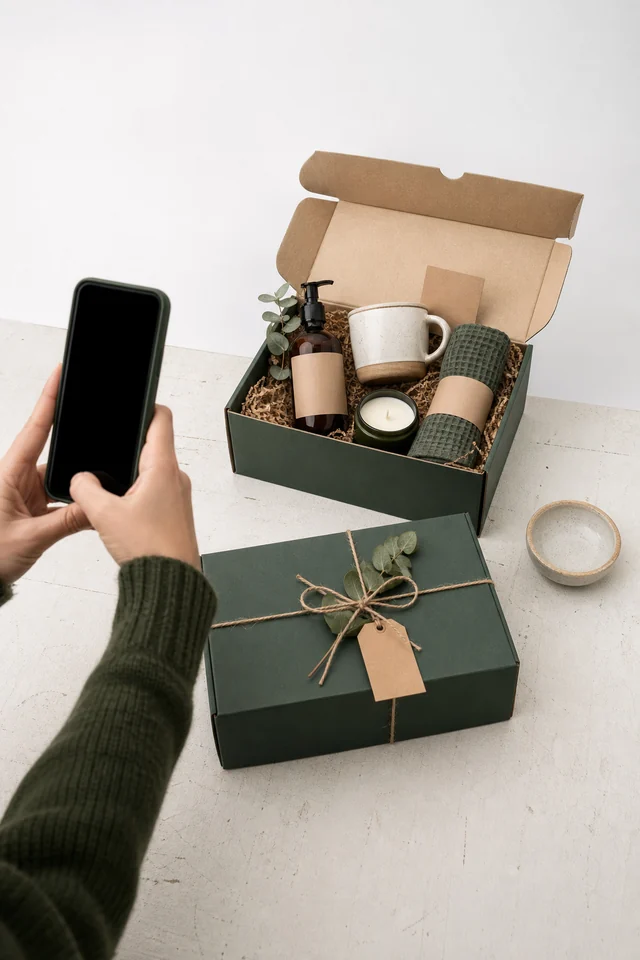
Don't just show a pile of products. Show the bundle the way it arrives: in its box or tin, wrapped, ready to give. Then show what's inside, laid out neatly.
Good bundle photos usually include:
- The bundle as it arrives, closed and wrapped
- The bundle open, showing everything inside
- Each item clearly visible, so buyers can see what they get
- A photo that shows the size, especially for gift boxes
Describe the bundle from the buyer's side
Start the description with who it's for and what it does, not a list of contents.
"The perfect gift for anyone who loves barbecuing, from weekend grillers to serious smokers. Three of our rubs, each paired with a meat or vegetable on the enclosed card."
Then list the contents below. That way, buyers know straight away whether this is the bundle for them.
Before you publish, ask someone who has not seen the bundle to read only the title, first image and first paragraph. Ask them who the bundle is for, what arrives and whether it is ready to give. If they cannot answer, the page is still making them assemble the idea themselves.
Check the same promise on the basket and order confirmation. If the product page says three tins arrive but the basket names only a product code, the buyer may hesitate at the last step. Keep the plain bundle name and contents visible through checkout.
Link bundles from the single product pages
Here's something that helps bundles sell without any extra advertising.
On each single product page, mention any bundle that includes it. "This rub is also in The Barbecue Box, ready to give as a gift."
Someone looking at one tin for themselves might suddenly realise they need a gift too. Or someone looking for a gift might land on a single tin first and need a nudge towards the bundle.
Nuala added a small line to every single tin's page. Bundle sales went up noticeably over the next month, and many came from people who'd arrived on a single product page first.
The stock-keeping trap with bundles
This is the practical problem that catches many small shops.
If your bundle contains items you also sell separately, you need to know how many bundles you can make with the stock you have. And when someone buys a bundle, your single-item stock needs to go down too.
Some shop platforms handle this automatically, linking bundle stock to the individual items. Others don't. If yours doesn't, you might sell a bundle that you can't actually make, because the last tin of smoky rub was sold separately an hour earlier.
There are a few ways to handle it:
- Check whether your platform or an app can link bundle stock to single items.
- Keep a small amount of stock set aside just for bundles.
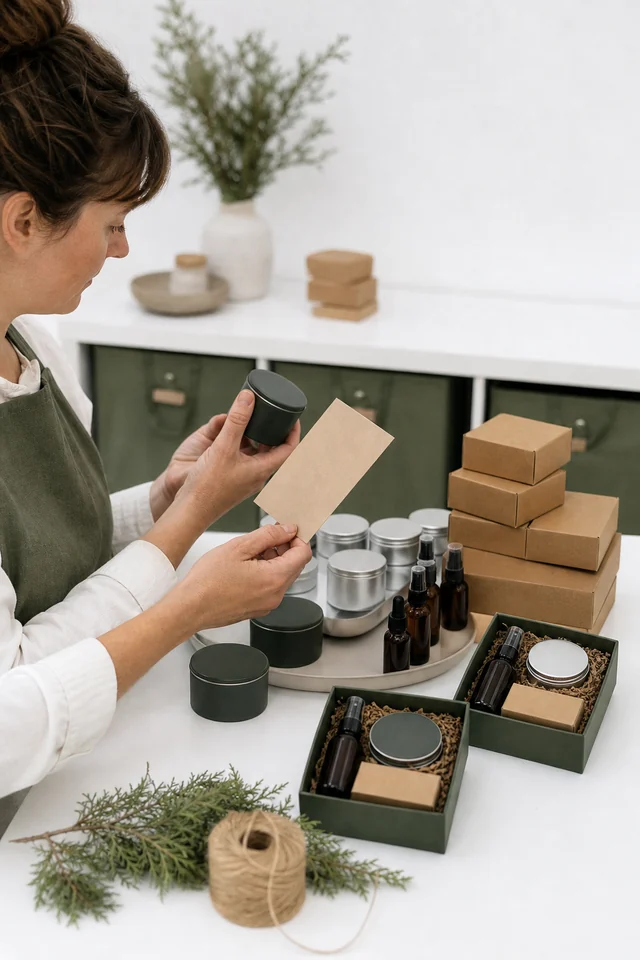
- Make bundles in advance, so each bundle is its own physical item with its own stock count.
Nuala makes up a set number of gift tins each week and treats them as separate stock. It's simpler for her, and she never oversells.
When to retire a bundle
Not every bundle will sell. That's normal.
Give a new bundle a fair chance, at least a few weeks and ideally through a gift season. Make sure it's linked from relevant pages and mentioned in an email.
If it still isn't selling, ask why.
Is the name clear? Is it obvious who it's for? Is the price right for the budget people have?
Sometimes a small change, like renaming "Spice Sampler" to "Can't Decide? Start Here", turns a dead bundle into a steady one.
If it still doesn't move, retire it. Fewer, clearer bundles are better than lots of vague ones.
Name bundles the way buyers search for them
The name of a bundle does a lot of work. It's what people see in your shop, in search results and in emails. It needs to say who it's for or what it does, in plain words.
Compare these:
| Vague name | Clear name |
|---|---|
| Spice Sampler | Spice Gift Set for Curry Lovers |
| The Ember Collection | Barbecue Rub Gift Box |
| Bundle No. 3 | Secret Santa Gift Under €20 |
| Discovery Box | Starter Set: Our Three Bestsellers |
The clear names match how people think and search. Someone looking for a gift for a barbecue fan is far more likely to type "barbecue rub gift" than "Ember Collection".
You can still keep a lovely name if you want. Just put the plain description first, the same way you would for a single product title.
Bundles for regulars, not just gift buyers
Most people think of bundles as gifts. But some of the steadiest bundles are for people buying for themselves, again and again.
If customers regularly buy the same few products together, that's a bundle waiting to be made.
Nuala noticed that many of her regular customers bought the same three blends every couple of months: the everyday curry blend, the smoky rub and the seaweed seasoning. So she created "The Kitchen Restock", those three in larger tins, at a small saving.
It became one of her most reliable products. Regulars no longer had to add three items to their basket every time. They clicked once.
Look at your past orders for repeat combinations. If the same two or three products keep turning up together, try bundling them. It saves your regulars time, and it often nudges them to buy a little more often.
Test a bundle before you make a lot of them
You don't need to make fifty gift boxes to find out whether a bundle will sell.
Make a small number first, perhaps ten. Put them on the site, mention them in one email, and see what happens over a couple of weeks.
If they sell quickly, make more. If they don't, you've only got ten to rethink, not fifty.
Nuala launched the Secret Santa Tin with just twelve. They sold in four days, which told her to make sixty for December. If she'd guessed wrong, she'd have had a dozen tins to unpack into single blends, not a storeroom full of boxes.
Small tests like this also let you try different names or prices before committing. A bundle is a new product, and it deserves the same careful start.
Your product bundle checklist
- Each bundle solves a problem, fits a moment or removes a decision.
- The name says who it's for or what it's for.
- Gift sets arrive ready to give, and can be sent straight to the recipient.
- The budget is clear for gift buyers.
- Any saving shown is real. If there isn't one, I don't pretend there is.
- The bundle still makes a sensible profit after packaging and time.
- Each bundle has its own page, photos and buyer-first description.
- Single product pages mention the bundles they're in.
- I've worked out how bundle stock and single-item stock connect.
Build it from their question
The best bundles feel like the shop was reading the buyer's mind. "I need a gift for a barbecue lover." "I want to start cooking curries." "I've got €20 for secret Santa."
You don't need to guess those questions. Your customers are already asking them, in emails, messages and conversations at your stall.
Listen to the questions, build a bundle that answers each one, and give it a name that says exactly who it's for. Then watch it do something leftover bundles never manage: sell because someone wanted it.
All five images are AI-generated illustrative concept art. They do not depict a real business, customer, product specification, test or business result.