The short version
- The people who don't buy at your stall are the ones your email list is for.
- Ask at the moment someone hesitates, and give them a reason linked to that moment.
- Paper, QR codes and tablets all work. Pick the one that suits your stall, and make it clear what people are agreeing to.
- Send a follow-up within two days that names the market, while they still remember you.
If you want to collect emails at craft fairs, start by looking at the wrong group of people. Not the buyers. The walkers.
You know the walkers. They stop at your stall.
They pick something up. They turn it over and say something nice.
"These are lovely." "My sister would love this." And then the line that every market seller hears a dozen times a day:
"I'll come back later."
Most of them don't. Not because they didn't mean it, but because there are forty other stalls, a coffee queue, a child who needs the toilet and a parking ticket ticking down.
By the time they remember, they're home, and they can't quite recall your name.
That's who your email list is for at a market. This article shows you how to catch those people kindly, what to give them, which signup method suits your stall, and how to follow up so they actually come back.
Why the people who don't buy matter more than the ones who do
At a market, the buyers are easy. They bought. You've got their money and, if they paid by card, maybe nothing else.
The walkers are where the real opportunity is.
Think about the numbers. On a good day you might sell to thirty people.
But a hundred or more might stop, look and leave. Many of them liked what they saw. They just weren't ready right then.
An online shop would love to have a hundred people a day picking up its products and saying "these are lovely". You get that at every market. Collecting emails is how you keep a little thread connecting you to them after they walk away.
The market stall and the clipboard that collected nothing
This is an illustrative example.
Burren Beeswax Wraps is run by Saoirse. She makes reusable food wraps from cotton and beeswax, in bright prints, and sells them at two or three markets a month plus her website.
She'd been told to collect emails, so she put a clipboard on the corner of her table with a sheet that said "Join our mailing list!"
After a whole summer of markets, she had 41 names. About a third of them she couldn't read.
Several were clearly the same family writing in each other's names. And she wasn't sure any of them had really meant to sign up for emails.
So she tried a different approach, and it changed how she thought about the whole thing.
Ask at the moment someone hesitates
The clipboard was waiting for people to come to it. Almost nobody did. People don't go to markets to join mailing lists.
What changed for Saoirse was timing. Instead of a sign, she started offering the signup at a specific moment: the moment someone hesitated.
When someone said "I'll come back later" or "I need to think about which print", she'd say something like:
"No problem. If you like, pop your email on this card and I'll send you photos of all the prints so you can choose at home. I'm at this market again in three weeks, too."
That's a very different offer from "Join our mailing list." It's tied to exactly what the person needs right now: time to decide, and a way to remember.
Match the reason to the hesitation
People hesitate for different reasons. The best signup offer answers the reason in front of you.
| What the person says | What you can offer |
|---|---|
| "I'll come back later." | "I'll email you a reminder of where to find me, and what I've got." |
| "I need to measure first." | "I'll send you the sizes so you can check at home." |
| "It's for a gift, I'm not sure yet." | "I'll send you the gift options and my last posting dates." |
| "I can't carry it today." | "I'll send you a link so you can order it to your door." |
| "Do you have it in another colour?" | "I'm making more soon. I'll let you know when they're ready." |
Each of these feels like a favour, not a sales trick. And people say yes to favours.

Choose a signup method that suits your stall
There are three common ways to collect emails at craft fairs. None is perfect. Pick the one that fits your setup and your customers.
Paper cards or a sheet
Simple, cheap, and nothing to charge.
The downsides: handwriting can be hard to read, and a shared sheet means everyone can see everyone else's email addresses, which people may not love.
If you use paper, try small individual cards instead of a big shared sheet. People fill one in, hand it to you, and nobody else sees it. Ask them to write in capitals.
A QR code that opens your signup form
People scan the code with their phone and fill in your form there. No handwriting problems, and it can feed straight into your email tool.
The downsides: some people find it fiddly, phone signal at markets can be poor, and a QR code on its own is easy to ignore.
If you use one, put it on a card or small stand with a clear line next to it saying what people get, not just "Scan me". And scan it yourself on your own phone before the market, from a normal distance, to make sure it actually works.

A tablet or phone at the stall
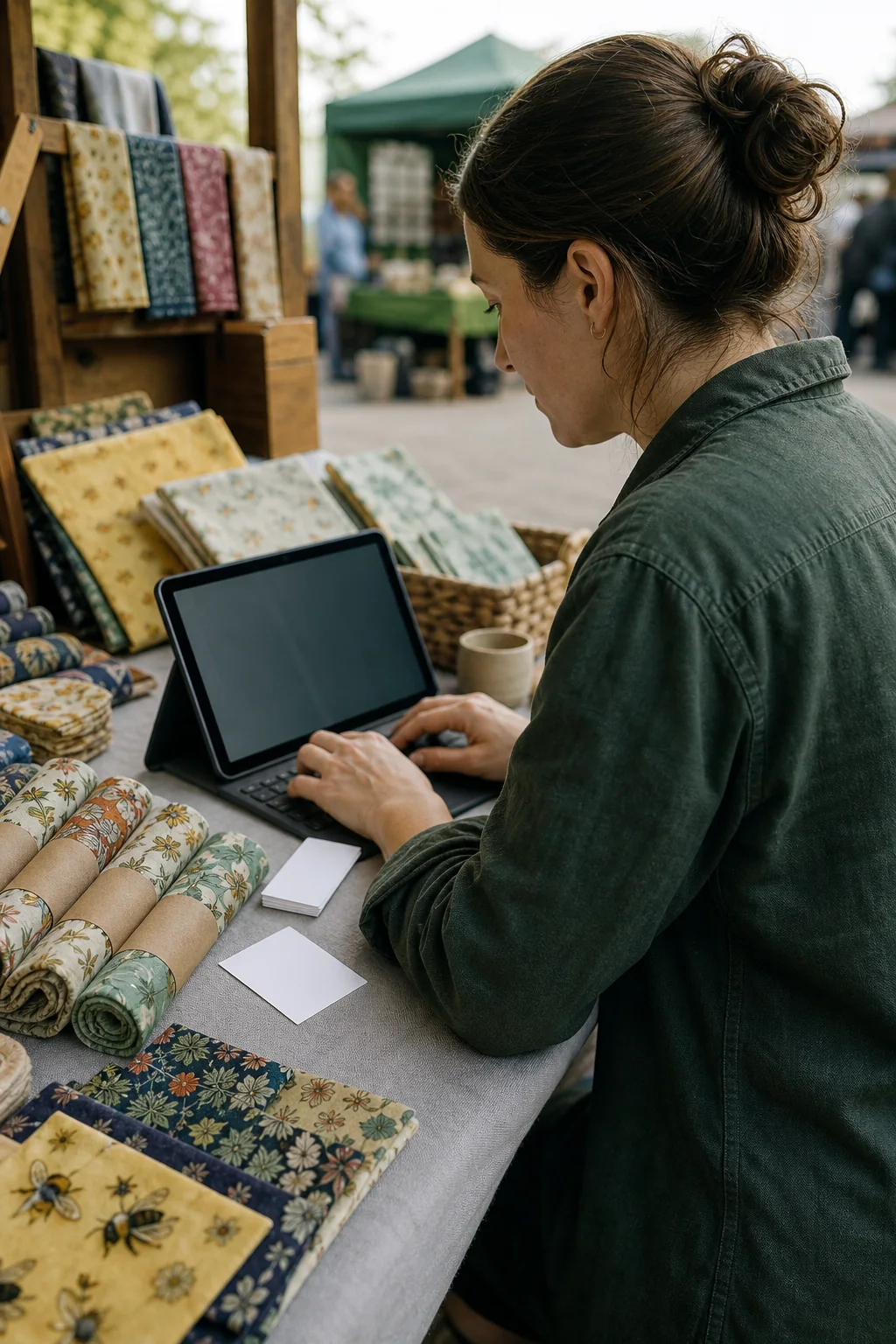
You hand over a tablet showing your signup form, and they type their email.
The downsides: it needs charging, it can feel more formal, and you need to keep an eye on it at a busy stall.
It does work well if you have a quieter corner of the table and a helper.
What Saoirse chose
She went with individual paper cards for most people, plus a small QR card for younger customers who preferred their phones. Each card said what people were signing up for and had a tick box for consent. She typed the paper ones into her email tool the same evening.
That combination worked because it gave people a choice, and nobody felt pushed into a method they didn't like.
Be clear about what people are agreeing to
This part matters both for trust and for the rules.
When someone gives you their email at a market, they should know what they're signing up for. Not in tiny print. Clearly.
Depending on where you live and sell, there are rules about collecting personal details and sending marketing emails. In Ireland, the UK and across the EU, that generally means people need to clearly agree to receive marketing, and you need to be able to show that they did.
Rules vary, so check the current guidance from your local data protection authority, or ask someone who knows, if you're unsure. This article isn't legal advice.
In practice, for most small sellers, a clear sentence and a tick box does the job well.
Saoirse's signup card
Get my emails
I'll send you photos of all the current prints, plus where I'll be selling next. About two emails a month. You can unsubscribe whenever you like.
Email: ______________________
First name (optional): ______________________
Which market? Ennis Farmers' Market
☐ Yes, please send me emails from Burren Beeswax Wraps.
Notice the details. It says what the emails contain, how often, and that people can leave.
The tick box is separate, and nothing is pre-ticked. And the market name is printed on the card, which helps later.
Tag every signup with the market it came from
That "Which market?" line is a small thing with a big payoff.
When Saoirse types the emails into her email tool, she adds a tag or note for each market. It takes a few extra seconds, but it lets her do two things.
First, she can send a follow-up that mentions the right market. More on that in a moment.
Second, she can tell people when she's going back to the market where they met her. Someone who signed up at Ennis cares a lot more about "I'm back at Ennis on Saturday" than "I'm at a market in Galway."
Over time, it also shows her which markets bring in the most engaged subscribers. One of her markets brought in lots of signups but very few clicks.
Another brought fewer signups, but those people bought online regularly. That changed which markets she kept going back to.
Send the follow-up within two days, and name the market
This is where most market sellers lose people. They collect emails, then wait until their next newsletter, which might be weeks away. By then, the person has forgotten them.
Send a short follow-up within one or two days. Use the market name. Remind them of the moment you met.
Subject: The beeswax wraps from Ennis market on Saturday
Hi,
Thanks for stopping by my stall at Ennis on Saturday. As promised, here are all the current prints in one place, so you can choose at home.
[Photos of each print, each linking to its page]
If you were buying for a gift, the set of three is the one people usually go for. It comes wrapped in brown paper with a care card.
I'll be back at Ennis on the 27th. If you'd rather pick one up then, just reply and I'll set it aside for you.
Saoirse
Burren Beeswax Wraps
Look at what this does.
The subject line uses words they'll recognise straight away: "beeswax wraps" and "Ennis market". The opening line reminds them of the moment.
It delivers exactly what she promised at the stall. And it gives them two ways to buy: online now, or in person next time.
The "set it aside" offer is especially good. It lets people who prefer buying face to face say yes without having to order online.
What to do with the "I'll come back later" people who do come back
Here's a lovely side effect of collecting emails at markets.
Some people do come back to your stall, later that day or at the next market. When they do, they often say "I got your email!" It's a nice moment. It also gives you a little clue about which emails work.
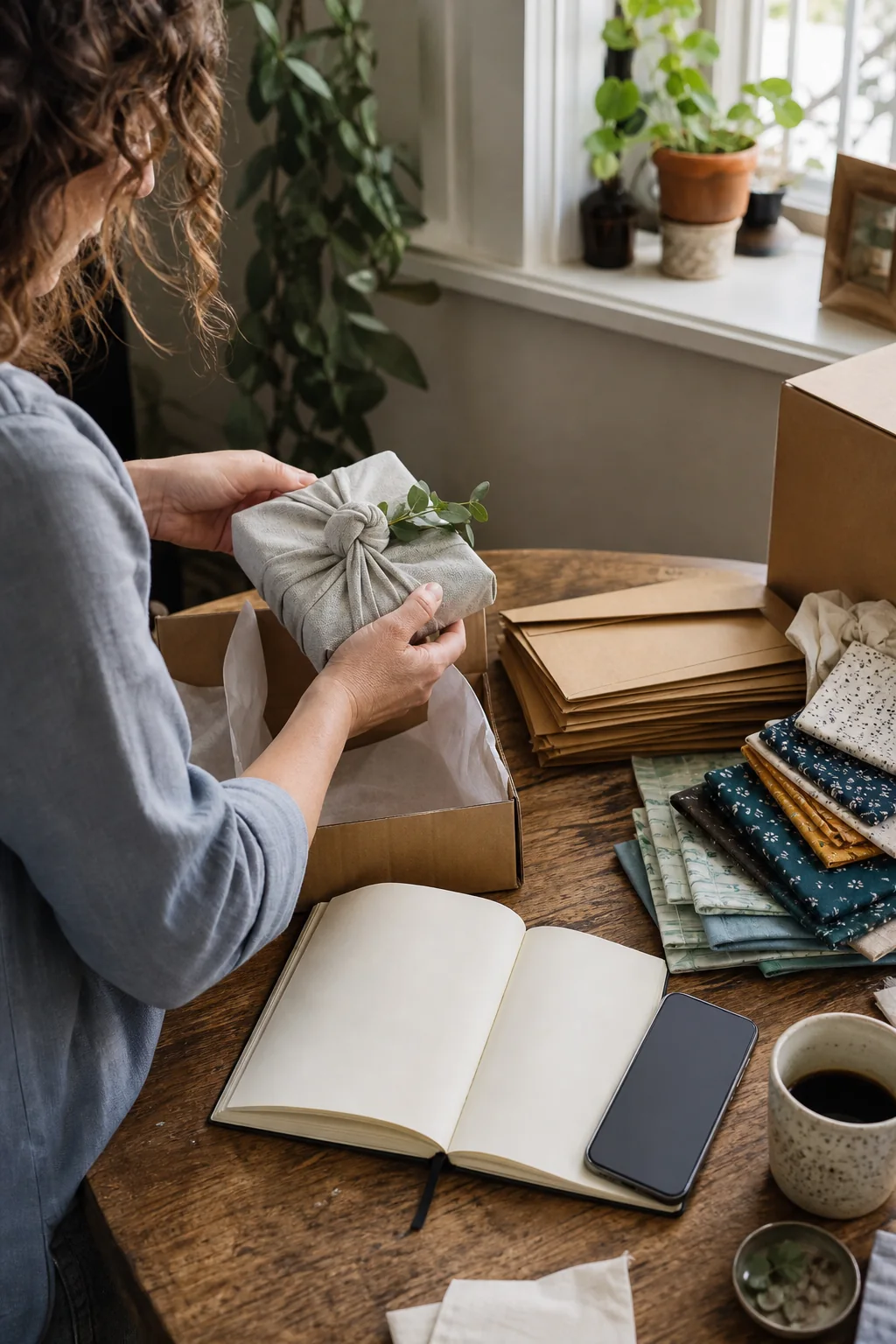
Saoirse started keeping a simple tally in her notebook. How many people mentioned the email at the stall? Which email did they mention?
It was rough, but it told her the photos-of-every-print email was doing a lot of work.
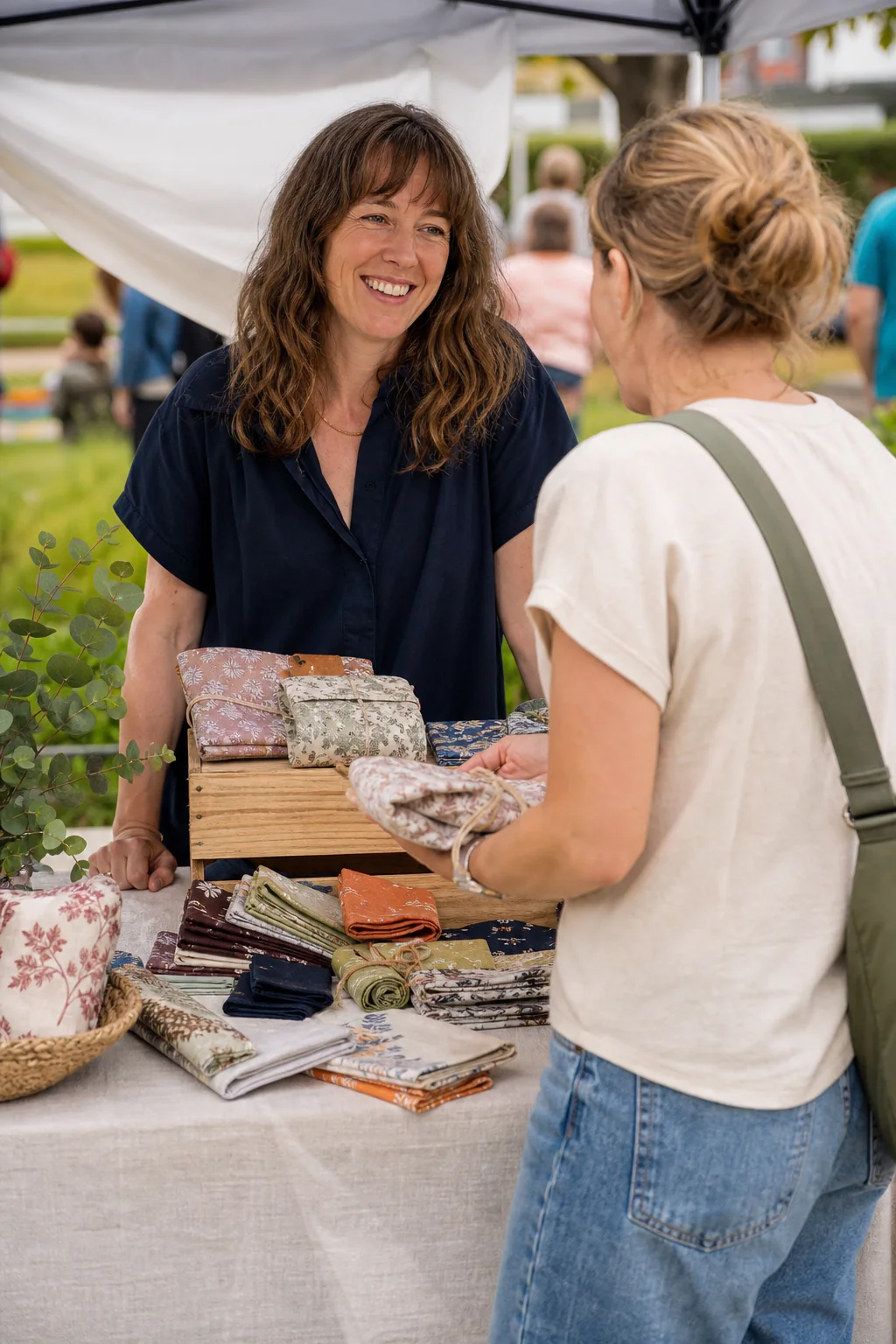
What to say out loud if asking for emails feels awkward
Lots of market sellers find this part uncomfortable. Asking for an email address can feel pushy, especially if you're naturally a bit shy.
Here's the thing to remember. You're not asking for a favour. You're offering one.
The person in front of you has just said they like your work and might come back. You're making it easier for them to do that.
It helps to have a few lines ready, so you're not making them up on the spot. Here are some that Saoirse uses, word for word:
- "Would it help if I emailed you photos of all the prints? Then you can choose at home."
- "I can send you a reminder of where I'll be next, if you like."
- "If you want to check the sizes first, pop your email here and I'll send them over tonight."
- "No pressure at all. If you'd like the link, I can email it to you."
Notice that none of these use the words "mailing list" or "newsletter". They describe what the person will actually get.
Keep the cards within reach, not on display
Saoirse keeps her signup cards and a pen in a small tin on her side of the table, not out on the front. She brings them out at the right moment. That way they feel like a personal offer, not a sign on the stall.
Accept the "no" cheerfully
Plenty of people will say no thanks. That's fine.
Smile, say "No problem, enjoy the market", and move on. A relaxed no today often turns into a buyer at the next market, because they remember that you didn't push.
What to send after the follow-up, so market subscribers stay
The follow-up email is the start, not the end. What comes next decides whether your market subscribers stick around.
Market people are a little different from website signups. They met you in person.
They remember a face, a stall and a conversation. Your next few emails should feel like a continuation of that, not like a generic shop newsletter.
A few things work especially well for them:
- Where you'll be next. A simple list of upcoming markets, with dates, near the top of each email.
- A bit of the making. Photos of wraps drying, fabric being cut, a new print being tested. It reminds them of the person behind the stall.
- A "set aside" offer. Keep offering to hold something for collection at the next market. Many market people prefer to buy face to face.
Saoirse noticed that her market subscribers clicked on "where I'll be next" more than anything else. So she moved it to the top of every email. It's now the most useful part of her newsletter for them.
The mistakes that quietly shrink your market list
A few common habits make market signups less useful than they could be.
- A big shared sheet that shows everyone's email. People feel awkward and some won't sign.
- No clear reason to sign up, just "Join our mailing list!"
- No mention of how often you'll email, so people worry you'll spam them.
- Leaving the cards in a box for weeks before typing them in.
- Sending the first email weeks later, with no mention of the market.
- Adding people who didn't clearly agree, like everyone who gave their email for a receipt.
That last one is worth repeating. Someone who gives their email for a card receipt hasn't agreed to marketing emails. Keep those separate unless they've clearly said yes.
Your craft fair email signup checklist
Before your next market:
- I have a short, clear reason to sign up, tied to why people hesitate.
- My signup method suits my stall: cards, QR code, tablet or a mix.
- The card or form says what emails people will get and roughly how often.
- There's a clear, unticked box for people to agree to marketing emails.
- The market name is on the card, so I can tag signups later.
- I've tested my QR code on my own phone from arm's length.
- I'll type paper signups into my email tool the same day or the next.
- I'll send a follow-up within two days that names the market.
The quiet win hiding in every market day
Next time you pack up after a market, don't just count the sales. Count the signups too, because each one is a person who liked your work and wants to hear from you again.
Those people are some of the warmest subscribers you'll ever have. They've held your product in their hands.
They've met you. All you need to do is catch them at the right moment, give them a good reason, and follow up while the memory is fresh.
Do that, and "I'll come back later" stops being a goodbye. It becomes the start of a conversation.
All five images are AI-generated illustrative concept art. They are not photographs of real market activity or evidence of product testing or customer outcomes.
Keep going
Product Pages / Practical guide
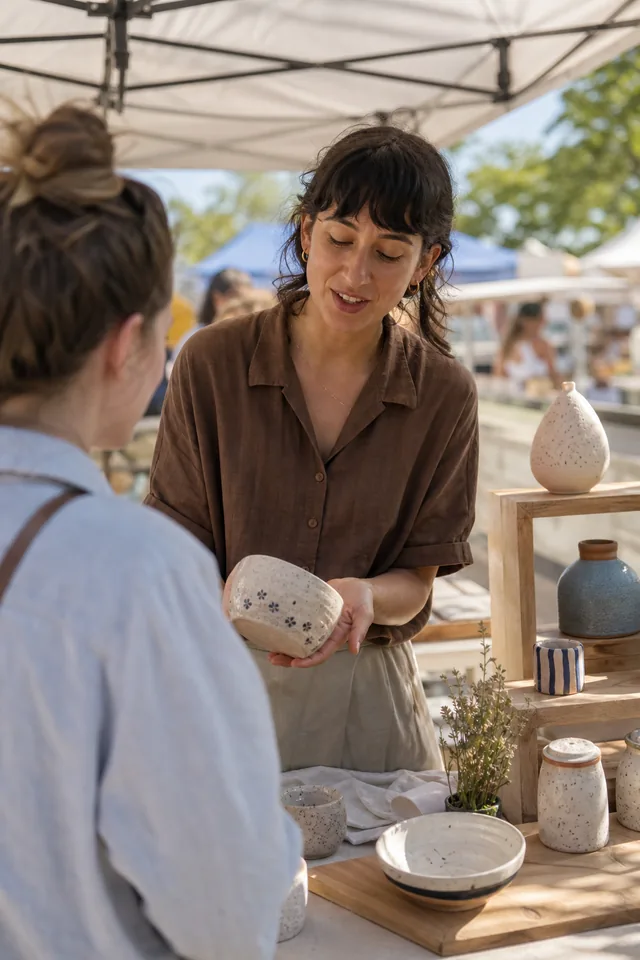
From Craft Stall to Product Page: Turn What You Say and Show at the Market Into What Your Page Says Online
At your stall, you answer questions in seconds with your voice, your hands and the product itself. Online, your product page has to do all of that in silence. Write down the conversations and the gestures you already use, turn each one into a fact, a photo or a clip, and put it where an online buyer needs it.
Email Marketing / Practical guide
Your First Welcome Email Doesn't Need a Discount: Deliver the Signup Promise in the First Two Lines
Your welcome email arrives while a new subscriber still remembers why they signed up. Use that moment to deliver exactly what your form promised, make the sender recognisable and explain what comes next. A discount is a choice to make on purpose, not the default.

Email Marketing / Practical guide
Email Signup Form Wording That Tells People Exactly What They're Joining, How Often, and What Arrives First
"Join our newsletter" asks for an email address without saying what people get in return. Rewrite your signup form as a small, honest promise with one reason to join and a realistic rhythm, then test every route into it, including the printed ones.